In order to bring you the best possible user experience, this site uses Javascript. If you are seeing this message, it is likely that the Javascript option in your browser is disabled. For optimal viewing of this site, please ensure that Javascript is enabled for your browser.
SCCGov Home Skip to Content
 
AGENCIES & DEPTS
Icon You Are Here YOU ARE HERE Vector Control District (DIV) Bookmark and Share Increase Font Size Decrease Font Size Email this Page
Banner for the Santa Clara County Vector Control District


Mission Statement
Vector Control’s Mission is to detect and minimize vector-borne diseases, to abate mosquitoes, and to assist the public in resolving problems with rodents, wildlife, and insects of medical significance.

Fogging to Suppress West Nile Virus Mosquitoes in Southeast San José Completed

Following last week's fogging operations in San Jose, all mosquitoes from post-fogging traps tested negative for WNV. There are no further plans for fogging operations at this time.  The good news is that we achieved a 58-67 percent reduction of mosquitoes in the fogging zone compared to untreated areas nearby. 

Ground fogging operations to suppress West Nile Virus mosquitoes in southeast San José were successfully completed at 4:40 a.m. on Thursday, September 15, 2011.

The fogging area was generally bordered by Hillsdale Avenue on the north; Pearl Ave., Kenton Ln., Glenmont Dr., and Windfield Blv on the west; Monterey Ave., Apple Blossom Dr., Lean Ave., Dunn Ave. on the east; and Curie Dr., and Foothill Dr. on the south.

Always contact the Vector Control District if you are being bothered by mosquitoes or know of a potential mosquito-breeding source.


View Larger Map

Subscribe to SCCVCD WNV Fogging Updates

Follow SCCVCD on Twitter


More Information …
    - Current Highlights from the State West Nile Virus Website.
    - Detailed Information on the Medical, Surveillance and Epidemiological aspects of West Nile Virus (California Public Health Department)

District Plans and Operations for WNV
    - The District's 2011 Mosquito-borne Virus Response and Operations Plan (MVROP)
    - Materials used in ground fogging.
        .Frequently Asked Questions about ground fogging.
        .Pyrenone 25-5 Label - This is the EPA-approved label which tells how the product may be used.
        .Pyrenone 25-5 MSDS (Material Safety Data Sheet)  - This is the document which tells about properties of the product as formulated. It is not intended as instruction for proper use in the field, but provides safety, hazard, chemical and fire-related information relevant to handling and storage of the formulated product. 
        .Pyronyl 525  - Label and MSDS. Same formulation as Pyrenone25-5.


Preventing Mosquitoes and West Nile Virus
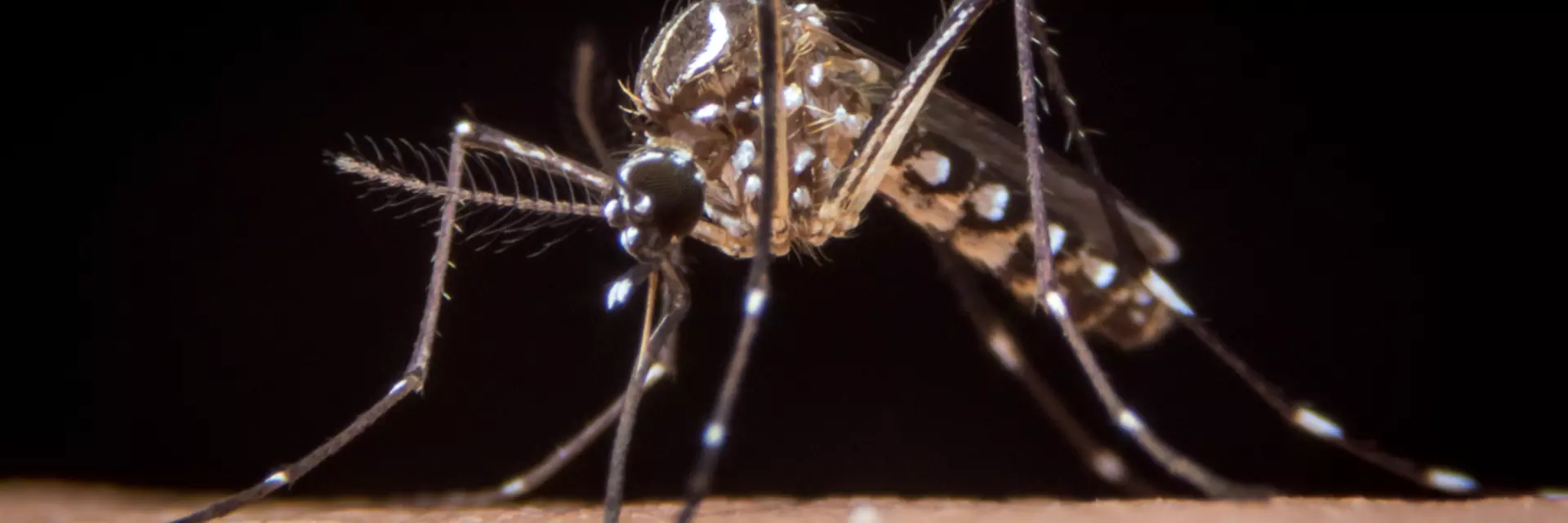
Transmitted by mosquito bites, WNV can cause mild to severe flu-like symptoms such as fever, headache, and body ache, and, in severe cases, significant neurological symptoms or even death. People over 50 and those with high blood pressure are at higher risk for severe disease. In 2009, California reported 129 WNV infections, with 112 symptomatic cases and 4 human fatalities. While no human cases of WNV have been confirmed in Santa Clara County this year, fogging to suppress WNV-infected mosquitoes is needed to reduce the imminent risk of transmission of the virus to humans.

Precautions that can be taken against mosquito bites are:

At home:
    • DRAIN or DUMP standing water weekly since this is where mosquitoes lay eggs. Check items such as flower pots and planter bases, toys, cans, leaky water faucets and sprinklers, rain gutters, buckets, pools, ponds, and old tires.
    • Make sure your DOORS and windows have tight-fitting screens.

Outdoors:
    • Limit activities during DUSK & DAWN to prevent mosquito bites. Those are the times when the mosquitoes that transmit WNV are most active.

If you need to go outside at dusk or dawn, or when in an area where mosquitoes are active:
    • Apply insect repellent following label instructions.
    • DRESS in long sleeve shirts and long pants, preferably of light colors.

Dead birds and squirrels may indicate the presence of West Nile Virus. The Vector Control District asks Santa Clara County residents to call if they find crows, jays, sparrows, finches, birds of prey, or tree squirrels that have been dead for less than 48 hours and do not appear to have died because of an injury. Report dead birds and squirrels to the State of California WNV hotline at 877-WNV-BIRD or at www.westnile.ca.gov. Click here for a flyer with pictures of birds and squirrels of concern.

For assistance on mosquito control, residents can contact the SCCVCD office by calling (408) 918-4770 / (800) 675-1155.


What’s a vector?
A vector can be a mosquito, a rat, a flea, a tick, any animal or insect that can transmit disease or cause harm to humans.

What exactly is Vector Control?
The Santa Clara County Vector Control District (the “District”) is a County public health program that controls and monitors disease-carrying insects such as mosquitoes and ticks, and other harmful pests such as yellow jackets and rats.

Primary services include:

• Detection of the presence/prevalence of vector borne disease through planned tests, surveys and samples
• Inspection and treatment of known mosquito and rodent sources
• Response to customer initiated service requests for identification, advisory, and/or control measures for mosquitoes, rodents, wildlife, and miscellaneous invertebrates (ticks, yellow jackets, cockroaches, bees, fleas, flies, etc.)
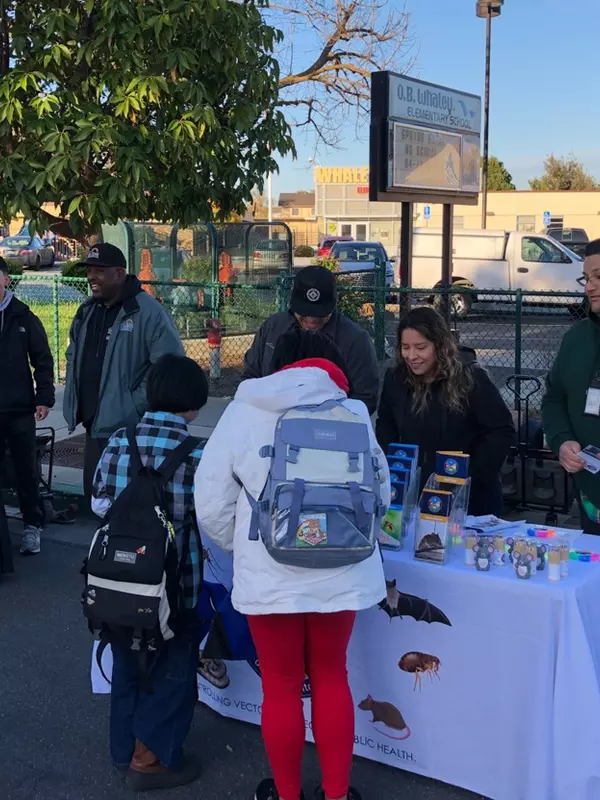
• Promotion of public awareness through outreach and educational services

Click here to learn more about the District.

Free home and yard consultations are available to all Santa Clara county residents for rodent, wildlife and mosquito problems.
Click here to request a free consultation or call 408-918-4770 or 800-675-1155.

How to find us!

Santa Clara County Vector Control District
1580 Berger Dr. 
San José, California 95112
(408) 918-4770 or (800) 675-1155
(408) 298-6356 fax

Leave us a message