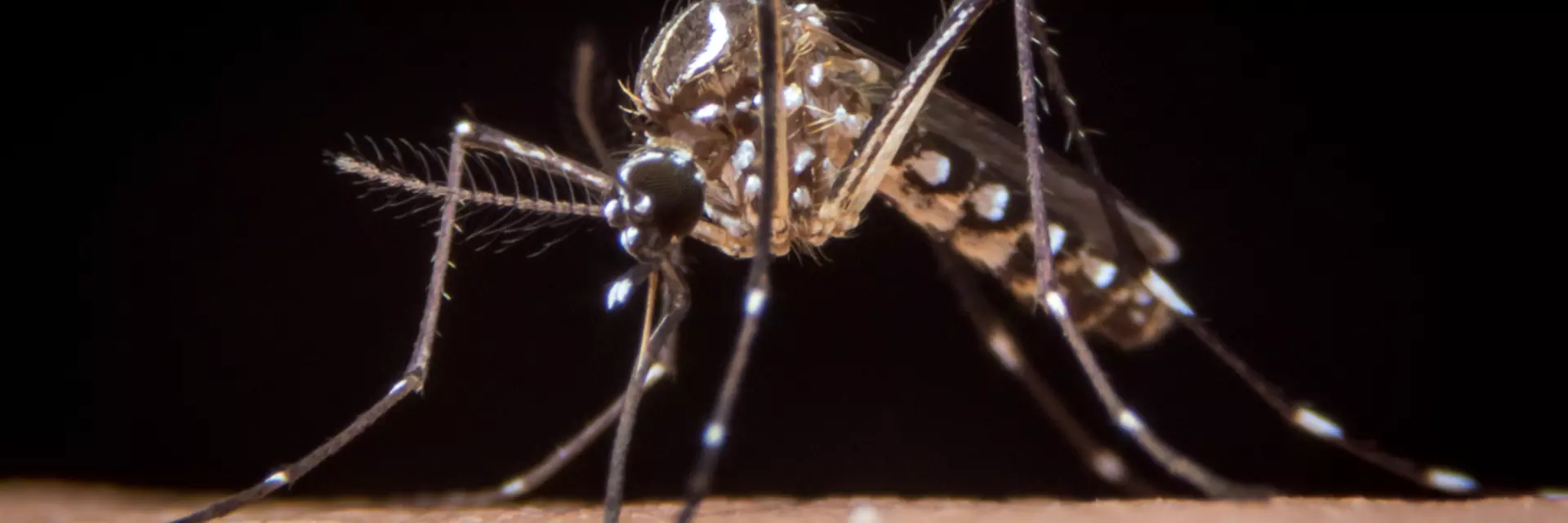
So far, post-fogging mosquito samples are negative for WNV, and mosquito numbers were reduced by 65% following the July 11, 2008 fogging operations. No further foggings are scheduled at this time. If positive mosquitoes are found, an additional fogging will be scheduled. “It is important for everyone to take precautions to avoid being bitten by mosquitoes. People need to remember to use insect repellent at dusk and dawn or whenever they are outdoors and there is mosquito activity,” District Manager Tim Mulligan said. “During warm weather make sure home window and door screens are in good repair and securely in place to help prevent mosquitoes from entering.”
Other steps recommended to take to reduce the risk of being bitten by mosquitoes are:
When outdoors, wear long sleeved shirts and long pants
Ensure door and window screens are in good repair to prevent mosquitoes from entering homes
Call the District for free mosquito-eating fish for water sources on their property, such as ponds, troughs, and decorative fountains
Contact the District to report mosquito problems or green pools/spas.
Please remember it is important to contact the State’s WNV Dead Bird Hot line at 1-877-WNV-BIRD (1-877-968-2473) to report birds that have been dead for less than 24 hours. These dead bird reports help the District to coordinate its mosquito surveillance activities in its search for WNV in the community.
To date, 25 counties in California have detected and reported WNV activity. There have been three human cases reported in California , over 332 infected birds, and 155 mosquito samples have tested positive for the virus. Southern California and the Central Valley areas of the state have been hit the hardest by WNV so far this year.
The Santa Clara County Vector Control District will conduct an aerial search of areas of the county on Tuesday as part of its urban mosquito control program. A plane equipped with digital photography capability will fly over 80 square miles looking for neglected pools and other backyard sources that could harbor developing mosquitoes and potentially carry the West Nile virus.
A single poorly maintained swimming pool can produce millions of mosquitoes which can be a nuisance and cause health risks for an entire neighborhood. “During the past two years, we’ve had tremendous success with aerial surveys in helping detect neglected swimming pools and ponds,” said District Manager Tim Mulligan. “Aerial surveys continue to be a vital part of our urban mosquito control program.”
The 80 square miles will include portions of San Jose, Sunnyvale, Mountain View, Los Altos, Los Gatos, Milpitas and Palo Alto. This includes the regions where there has been significant West Nile activity during the past two summers. Northeast San Jose, Milpitas and Palo Alto and the northern half of Mountain View have not been surveyed in the past. A map of the survey areas is available here
The District's first aerial survey was conducted early in May, and identified more than 250 properties with green pools. Since the survey, there have been 418 inspections and 113 treatments or fish plantings on these properties. So far this year, there have also been an additional 294 inspections and 156 treatments or fish plantings on properties identified in prior years or through real estate data. The chemically treated and fish planted properties represent approximately 46 acres of prime mosquito breeding habitat.
Vector Control Technicians will contact and explain to property owners, identified through the aerial survey, the health risk posed by poorly maintained swimming pools and ponds. In cooperation with the property owner immediate steps will be taken to resolve the problem. Although formal enforcement has not been necessary, to date, property owners can be subject to fines of up to $1,000 per day for failure to abate a public health nuisance.
“Although no human cases of West Nile virus have been reported in Santa Clara County to date, we have eight positive dead birds and three positive mosquito samples. Residents still need to take precautions against mosquito bites,” said Assistant Manager Russ Parman. “Residents need to remember to use insect repellent on exposed skin when outdoors, and eliminate standing water on their property. That is their best defense against West Nile virus.”